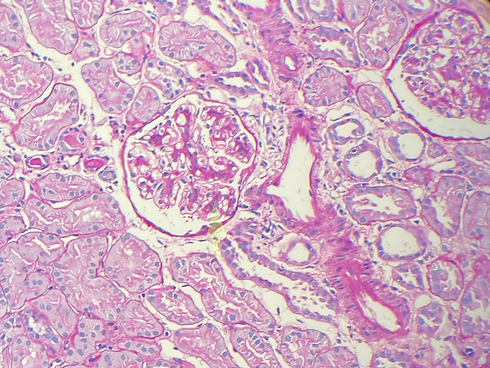

Collaborative Longitudinal Assessment of Randomized Interventions and Therapies in IgA Nephropathy Consortium
CLARITY-IgAN aims to leverage randomized clinical trial data to generate reliable evidence on the efficacy and safety of various therapeutic agents in IgA nephropathy across major patient phenotypes - with the ultimate goal of improving outcomes for people with IgAN worldwide.
About CLARITY-IgAN
IgA nephropathy (IgAN) is the most common primary glomerular disease worldwide and a leading cause of kidney failure. Multiple new therapies are now being evaluated in randomized clinical trials globally. However, most individual trials are not powered to assess treatment effects in key patient subgroups or reliably evaluate effects on clinical kidney outcomes. IgAN varies considerably in its clinical presentation, rate of progression, and response to therapy, making it critical to understand how treatment effects differ across patients - yet individual trials are rarely designed or powered to address this. There is therefore a pressing need for coordinated international collaboration to deliver reliable evidence on the efficacy and safety of emerging therapies across the full range of patients living with IgAN.
CLARITY-IgAN is an academically initiated and led Consortium that aims to address this need through high-quality collaborative two-stage meta-analyses of data from major randomized controlled trials in IgAN. The Consortium aims to generate reliable estimates of the effects of various therapeutic classes on kidney, quality-of-life, and safety outcomes; understand how treatment effects vary across demographic, clinical, and histopathologic subgroups; better understand variations in the natural history of IgAN and longitudinal trajectories of proteinuria and eGFR; and develop and validate novel endpoints to enable more efficient future trials.
Together, these efforts aim to inform clinical practice guidelines, support regulatory science, and ultimately improve care for people living with IgAN worldwide.
Executive Steering Committee

Assoc. Prof Brendon Neuen
Consortium Director
The George Institute for Global Health, Australia

Prof Richard Lafayette
Stanford University, USA

Prof Brad
Rovin
Ohio State University Wexner Medical Center, USA

Prof Vlado Perkovic
Consortium Co-Chair
University of New South Wales, Australia

Prof Hiddo Heerspink
University Medical Center Groningen, Netherlands

Prof Hong
Zhang
Peking University First Hospital, China

Prof Jonathan Barratt
Consortium Co-Chair
University of Leicester, UK

Prof Jicheng
Lv
Peking University First Hospital, China

Prof Kirk Campbell
University of Pennsylvania, USA

Prof Dana
Rizk
University of Alabama at Birmingham, USA